
 0
0
 EN
EN  English
 عربى
عربى Español
 русский
If you need any help, please feel free to contact us
Home / News / Industry News / Why is the Liquid Turbine Flowmeter Essential for High-Precision Liquid Metering?
Why is the Liquid Turbine Flowmeter Essential for High-Precision Liquid Metering?
In the realm of precision fluid measurement, the Liquid Turbine Flowmeter remains one of the most reliable and efficient instruments for handling clean, low-viscosity fluids. The LWGY Series Liquid Turbine Flowmeter is a testament to this reliability, offering a compact design that marries mechanical robustness with sophisticated electronic sensing. Designed specifically for industrial and commercial systems, this flow meter converts fluid kinetic energy into a measurable rotational frequency. By focusing on simple construction and high-speed response, the LWGY series provides a cost-effective yet highly accurate solution for diverse liquid applications ranging from water treatment to refined chemical processing.
How Does the LWGY Series Convert Flow Velocity into Rotational Data?
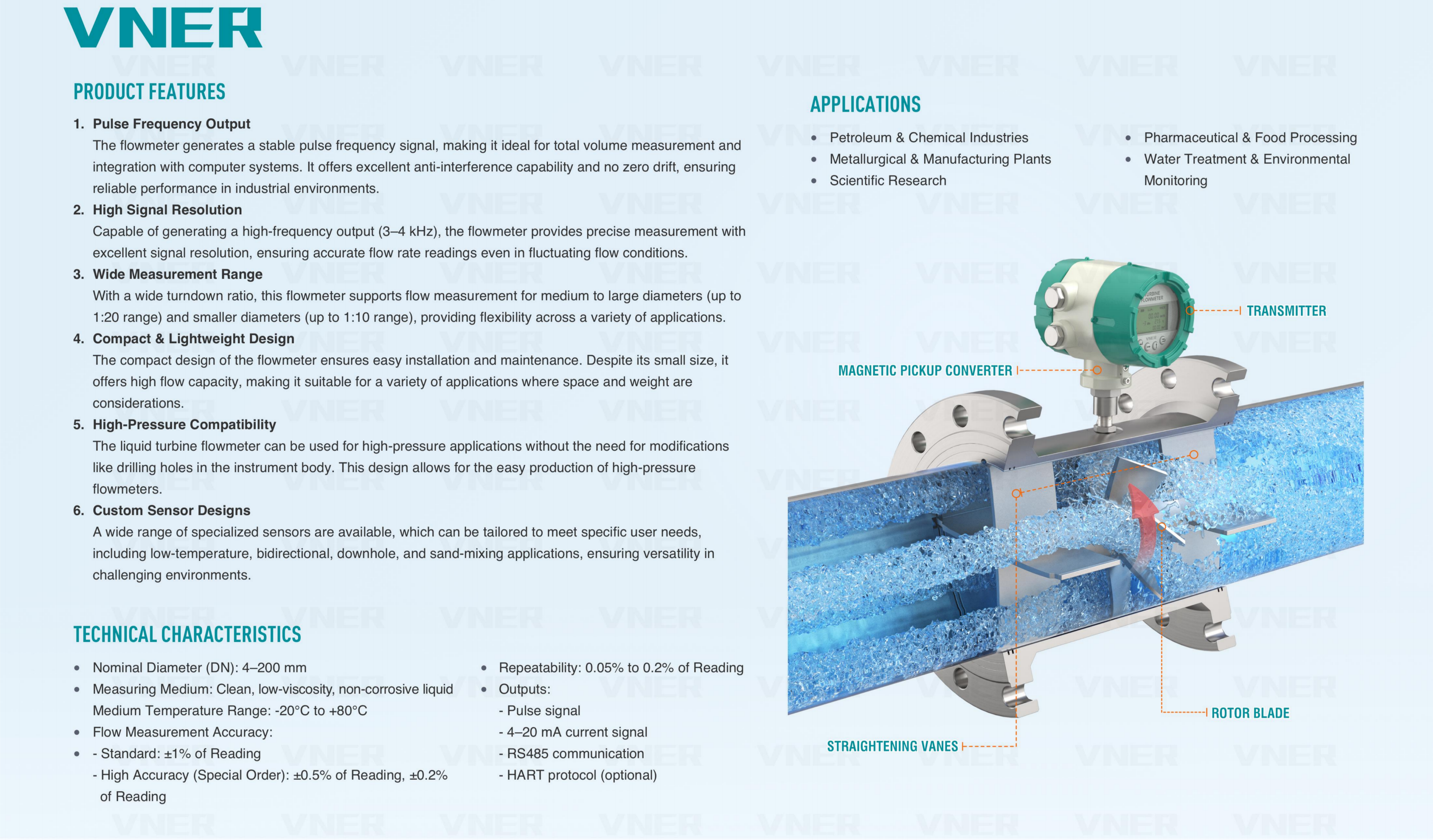
The core functional principle of the Liquid Turbine Flowmeter is deceptively simple but requires precise engineering to maintain accuracy. As liquid enters the meter, it is first conditioned to ensure a stable flow profile before it interacts with the internal components.
What is the Role of the Flow Straightener and Rotor Assembly?
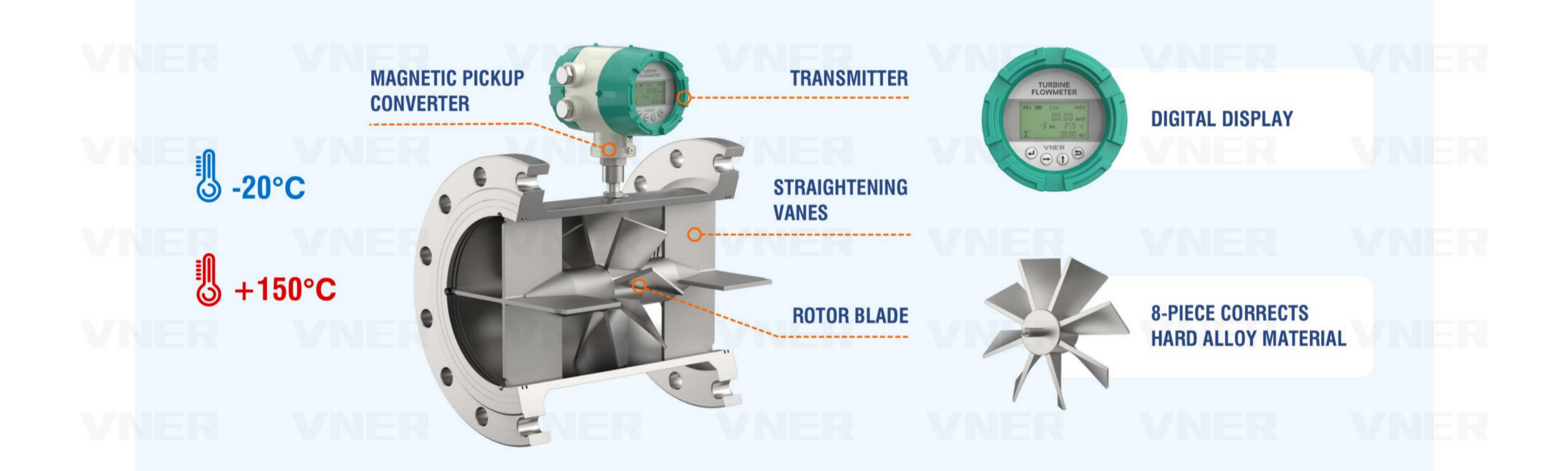
The process begins as the liquid passes through an integrated flow straightener. This component is critical because it eliminates turbulence and swirl caused by upstream pipe bends or valves. Once the flow is stabilized, it passes over the turbine rotor. The angle of the rotor blades is designed such that the velocity of the liquid forces the turbine to spin. Because of the precision-machined bearings and lightweight rotor, the rotor speed becomes directly proportional to the volumetric flow rate. This linear relationship is what allows the Liquid Turbine Flowmeter to maintain such high accuracy across its entire operating range.
How Does the Pickup Sensor Detect Precise Blade Passages?
To translate mechanical rotation into an electrical output, the LWGY series utilizes a high-sensitivity pickup sensor. As the turbine rotates, the stainless steel blades pass through the magnetic field generated by the sensor located on the exterior of the flow body. Each time a blade passes the sensor, a pulse is generated. The resulting pulse signal features a frequency that is directly proportional to the flow velocity. This digital-ready output can be sent directly to a local display, a PLC, or a batch controller for real-time monitoring and data logging.
What are the Primary Technical Specifications of the LWGY Series?
To assist in system integration and hardware selection, the following table outlines the fundamental characteristics of the LWGY Series Liquid Turbine Flowmeter:
|
Feature Category |
Technical Specification Detail |
|---|---|
|
Measurement Principle |
Turbine Rotation / Frequency Induction |
|
Applicable Media |
Clean, Low-Viscosity Liquids (Water, Alcohol, Solvents) |
|
Accuracy Class |
0.5% or 1.0% of Reading |
|
Body Material |
304 or 316L Stainless Steel |
|
Rotor Material |
CD4MCu or Duplex Stainless Steel |
|
Signal Output |
Pulse, 4-20mA, or RS485 Modbus |
|
Pressure Capability |
Up to 6.3 MPa (Higher on request) |
|
Response Time |
Fast (<0.1 seconds) |
Why is the LWGY Series Suited for Batching and Dispensing Applications?
In many industrial processes, the ability to measure a specific volume of liquid quickly and repeatably is more important than monitoring continuous flow. The Liquid Turbine Flowmeter excels in these "Batching" scenarios due to its unique physical properties.
Does the Fast Response Time Improve Dispensing Accuracy?
One of the standout features of the LWGY Series is its low inertia rotor. Unlike heavier displacement meters, the turbine rotor in this Liquid Turbine Flowmeter accelerates and decelerates almost instantly with the flow of liquid. This "fast response" is vital in dispensing applications where valves open and close rapidly. If a meter has a slow response time, it may miss the initial "slug" of fluid or continue to count after the valve has shut, leading to cumulative errors. The LWGY ensures that every drop is accounted for from start to finish.
How Does Excellent Repeatability Benefit Quality Control?
In chemical blending or pharmaceutical "Batching," consistency is the primary metric of success. The Liquid Turbine Flowmeter offers excellent repeatability, typically within 0.05% to 0.2%. This means that if the same volume of liquid is passed through the meter multiple times under the same conditions, the output will remain virtually identical. For industrial operators, this reliability simplifies quality control and ensures that product formulations remain consistent over thousands of cycles.
Can the Liquid Turbine Flowmeter Withstand High-Pressure Industrial Environments?
While the internal mechanisms are delicate enough to detect low flow rates, the external housing of the Liquid Turbine Flowmeter is built for durability. The LWGY Series is designed to thrive in demanding mechanical environments.
Is the Robust Mechanical Design Capable of Handling High Pressure?
Constructed from high-grade stainless steel (304 or 316L), the LWGY series features a robust mechanical design that can withstand significant line pressures. This high-pressure capability makes it a preferred choice for hydraulic testing stands, oil field water injection, and high-pressure cleaning systems. The meter’s ability to maintain its structural integrity under pressure ensures that the internal clearances between the rotor and the housing remain constant, preventing measurement drift or mechanical failure during pressure spikes.
Why is Cleanliness a Prerequisite for Turbine Meter Longevity?
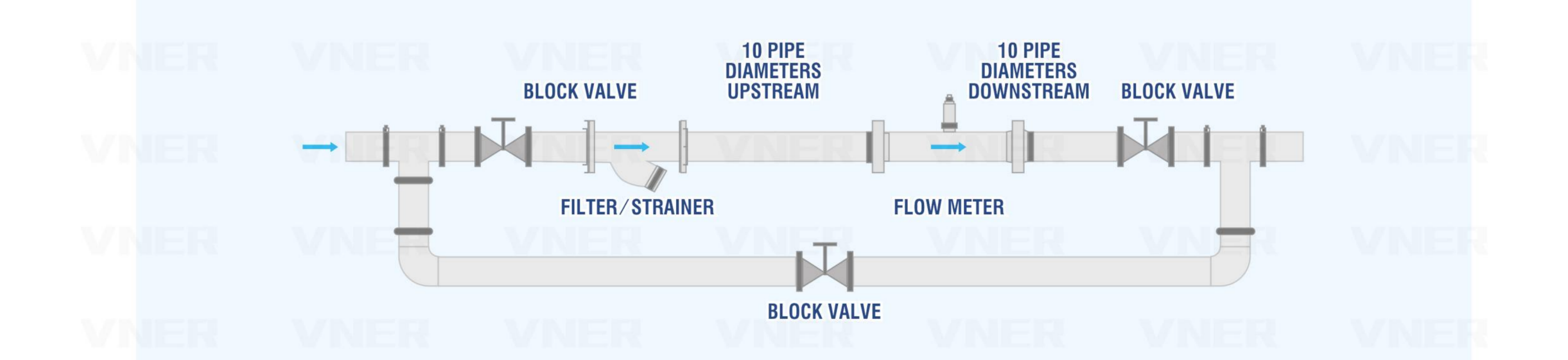
It is important to note that the Liquid Turbine Flowmeter is specifically designed for media that is clean and free of large particles or fibrous content. Because the turbine spins at high speeds on precision bearings, any solid debris could cause abrasion or even jam the rotor. In systems where the liquid might contain occasional particles, the installation of a 20-40 mesh strainer upstream is a standard recommendation to protect the LWGY internals and extend the service life of the device.
How Does Low Weight and Compact Construction Benefit System Design?
Modern industrial skids and portable metering units require components that are both powerful and portable. The Liquid Turbine Flowmeter fits these requirements perfectly.
Does the Compact Form Factor Simplify Retrofitting?
The LWGY Series is characterized by its compact and low weight design. Compared to bulky electromagnetic flowmeters or heavy coriolis meters, the turbine meter can be installed in tight piping configurations without the need for heavy support brackets. This makes it particularly attractive for "General-Purpose Liquid Metering" where an existing pipe layout cannot be easily modified. The flanged or threaded connections allow for quick installation and removal during maintenance periods.
What Makes this Meter a Cost-Effective Solution for General Metering?
By focusing on a streamlined mechanical design, the Liquid Turbine Flowmeter provides a high level of performance at a lower price point than many alternative technologies. For "General-Purpose Liquid Metering" in commercial buildings—such as chilled water monitoring or fuel consumption tracking—the LWGY series offers the necessary accuracy without the excessive cost of more complex specialized meters. Its simplicity also translates to ease of use; the pickup sensor and local converter are often plug-and-play, requiring minimal calibration effort for standard liquids like water or diesel.
How is the Pulse Signal Leveraged for Remote Monitoring?

The "Digital Native" nature of the Liquid Turbine Flowmeter output makes it highly compatible with modern automation.
Can the Signal Be Integrated into PLC and SCADA Systems?
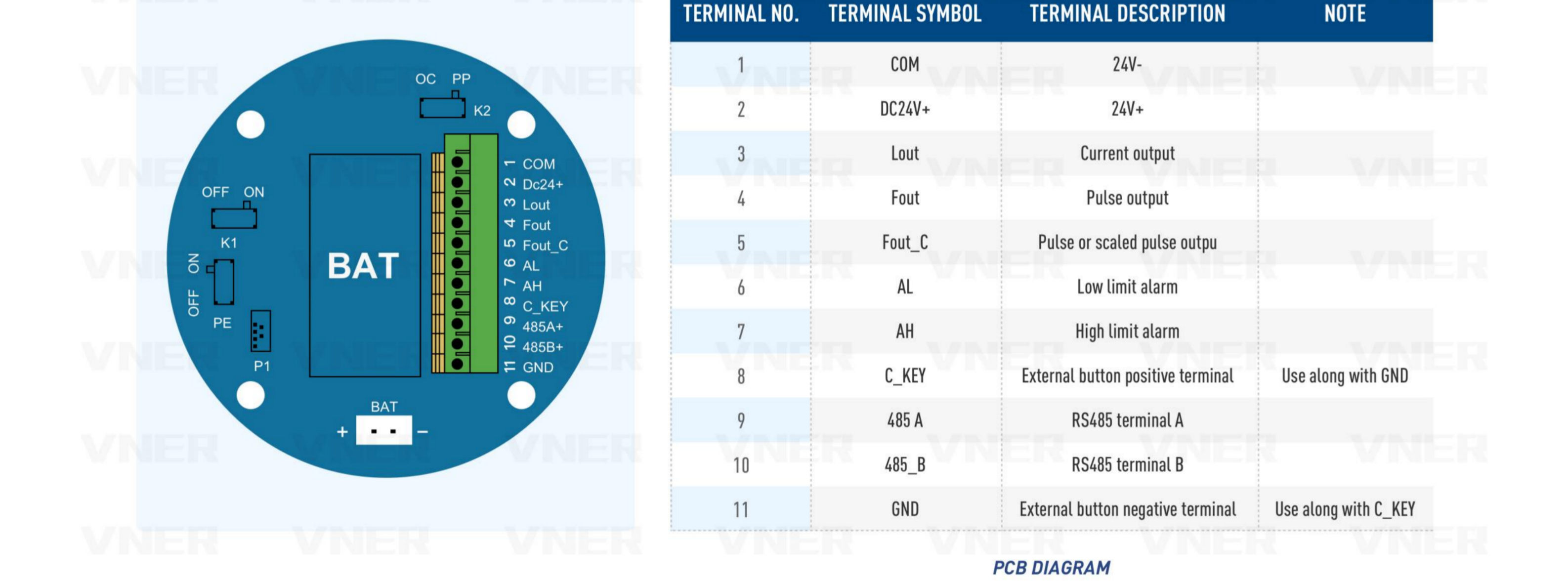
The raw pulse signal generated by the LWGY is a clean, square-wave frequency that is easily interpreted by almost any PLC (Programmable Logic Controller). For facilities moving toward Industry 4.0, the meter can be equipped with a transmitter that converts this pulse into a 4-20mA analog signal or a digital Modbus RS485 output. This allows the volumetric flow rate and totalized flow to be monitored from a central control room, facilitating remote process adjustments and automated inventory management.
Is Local Display an Option for Standalone Applications?
For applications where a control system is not present, the LWGY Series can be fitted with a battery-powered local integrator. This allows operators to read the flow rate and total volume directly at the measurement point. Whether used for checking the efficiency of a pump or monitoring the water usage of a specific machine, the Liquid Turbine Flowmeter provides clear, immediate data that is essential for operational transparency and resource management.


Products
Contact Information
-

+86 18652789521
+86-0514-83633600 / 83633900 -

+86-0514-83633600 / 83633900
-

s@vner.com.cn
katherine@vner.com.cn -

No. 11 Xingye Road, Chenji Town Industrial Park, Yizheng, Yangzhou, China
