
 0
 EN
 English
 عربى
 Español
 русский
If you need any help, please feel free to contact us
Home / News / Industry News / Gauge Pressure vs Absolute Pressure: A Practical Guide for Industrial Flow
Gauge Pressure vs Absolute Pressure: A Practical Guide for Industrial Flow
A gas flow computer at a city gate station was reading about 6% high after a pressure transmitter replacement. The impulse lines were clear, the orifice plate was unchanged, and the calibration certificate matched the tag. The problem was simpler and more expensive than a failed sensor: a gauge transmitter had been connected to an absolute-pressure input. At that site, local atmospheric pressure was roughly 95 kPa, not the 101.325 kPa constant stored in the flow computer. The instrument was accurate as a gauge device, but the calculation used the wrong reference.
Gauge pressure and absolute pressure describe the same physical quantity against different zero points. Gauge pressure uses local atmosphere as zero. Absolute pressure uses perfect vacuum as zero. The relationship is straightforward: absolute pressure equals gauge pressure plus local atmospheric pressure. The engineering consequences are less straightforward, especially in vacuum service, low-pressure gas flow, altitude-sensitive installations, and custody transfer. The right choice begins with the process variable and the contract, not with the transmitter model that happens to be on the shelf.
Start With the Reference Point, Not the Transmitter
A pressure reading is incomplete until its reference is known. A gauge value of 50 kPa means 50 kPa above the surrounding atmosphere. An absolute value of 50 kPa means 50 kPa above perfect vacuum. Those two numbers can describe completely different gas densities, boiling points, and flow corrections. In a plant with a nominal atmospheric pressure near sea level, the numerical difference is about 101 kPa; at higher elevation, the gap changes.
The formula is Pabs = Pgauge + Patm. A vacuum gauge reading of -30 kPa therefore corresponds to an absolute pressure of about 70 kPa when local atmospheric pressure is 100 kPa. The negative sign is a gauge convention, not a negative absolute pressure. Absolute pressure cannot fall below zero. This distinction matters when a control system, safety interlock, or flow computer expects one reference and receives another.
Sealed gauge transmitters add a third case. They use a sealed internal reference close to one atmosphere rather than the live local atmosphere. They are sometimes treated as pseudo-absolute devices, but they are not true absolute transmitters. Temperature changes and seal integrity can shift the reference. If the process requires a fixed vacuum reference, specify an absolute transmitter; if it requires atmospheric-relative measurement, use a vented gauge transmitter.
Why Atmospheric Pressure Is Not a Constant
Standard atmosphere is convenient for textbooks, not for site documentation. At sea level, standard atmospheric pressure is 101.325 kPa absolute, or 14.696 psi absolute. At an elevation of 1,500 m, atmospheric pressure is closer to 85 kPa. Weather systems can move local pressure by a few kPa, and a sealed control room or compressor enclosure may not see the same pressure as an outdoor transmitter.
For hydraulic systems and general plant monitoring, those variations often sit inside the measurement uncertainty. For a low-pressure gas line, a vacuum distillation column, or a flow computer converting actual volume to standard volume, a few kPa can be a material error. A gauge transmitter installed at altitude and paired with a fixed sea-level constant in the flow computer will overstate absolute pressure. The flow calculation then overstates gas density or standard volume, depending on the equation used.
The practical answer is to record the reference in the datasheet, on the P&ID, and in the calibration procedure. If a gauge transmitter is used where absolute pressure is required, measure local barometric pressure with a suitable barometer and apply it at the same frequency as the flow calculation. Do not treat 101.325 kPa as a site constant unless the site has been checked against that assumption.
Where the Reference Choice Changes the Result
The difference between gauge and absolute pressure is not academic. It changes the zero point of the measurement, the interpretation of vacuum readings, and the validity of gas-flow compensation. The table below summarizes the practical comparison.
| Reference | Zero point | Relationship | Typical fit | Main risk |
|---|---|---|---|---|
| Gauge pressure | Local atmosphere | Pabs minus Patm | Hydraulic and pneumatic systems, pump discharge, filter monitoring, general plant indication | Barometric and altitude changes; negative readings near vacuum |
| Absolute pressure | Perfect vacuum | Pgauge plus Patm | Vacuum service, gas density and flow compensation, thermodynamics, altitude-independent records | Higher attention to zeroing and reference calibration |
| Sealed gauge | Sealed reference near one atmosphere | Not a true absolute reference | Applications where venting is impractical but atmosphere-relative measurement is acceptable | Reference drift with temperature or seal condition |
| Differential pressure | Difference between two points | P1 minus P2 | Orifice and venturi flow, filter drop, level measurement | Static-pressure effects and reference mismatch in the transmitter assembly |
Flow Measurement: When Pressure Becomes a Correction Input
Many flowmeters measure a volume at line conditions. Gas turbine meters, vortex meters, and differential-pressure devices often need pressure and temperature correction to convert actual volume to standard volume or mass. The correction equation expects absolute pressure. If the transmitter supplies gauge pressure, the flow computer must add local barometric pressure. If it adds a fixed constant, the result is only correct at one elevation and one weather condition.
This is where a pressure-compensated flowmeter can reduce integration risk. A swirl flowmeter with temperature and pressure compensation, such as the SA80TTP series, brings the correction inputs into the measurement package instead of leaving the reference conversion to a separate device. The engineering question remains the same: confirm whether the internal calculation uses absolute pressure and how the barometric reference is handled during commissioning.
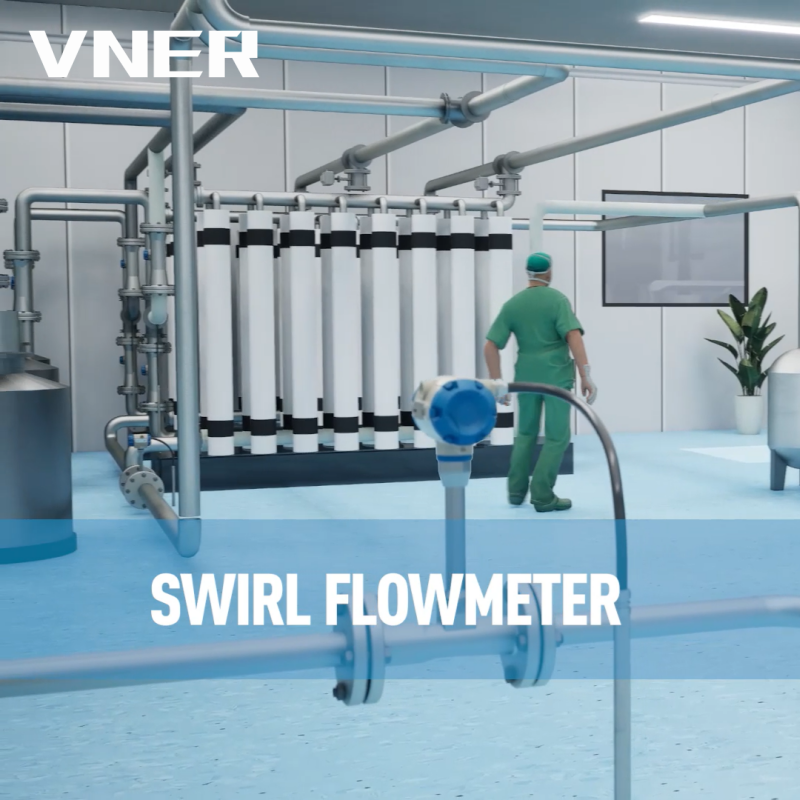 SA80T-TP Temperature/Pressure-Compensated Swirl FlowmeterIntegrates temperature and pressure measurement and real-time density calculation for compensated mass and standard volume flow in steam and gas service.View Product →
For differential-pressure flow elements, the static pressure also affects the transmitter and the flow coefficient. A gauge transmitter may be acceptable for a local indicator, but the flow computer still needs absolute static pressure for the density term. In vacuum service, the need is clearer: absolute pressure is the only reference that remains positive and physically meaningful across the operating range.
Choosing Gauge vs Absolute for a Project
A specification should start with the process question. Is the variable naturally expressed relative to the surrounding atmosphere, or does the physics depend on absolute pressure? A pump discharge pressure is usually a gauge measurement because the useful value is the pressure above atmosphere. A vacuum column, compressor inlet, or gas-density calculation is usually absolute because atmosphere is not a meaningful zero.
The following checks help keep the choice consistent from datasheet to commissioning:
- Read the contract and the control-system tag. Custody transfer, safety interlocks, and flow computers often state absolute pressure explicitly.
- Record local barometric pressure and site elevation. A gauge transmitter used in an absolute calculation needs a measured atmospheric reference, not a standard constant.
- Check the calibration method. A gauge transmitter is normally vented to atmosphere and zeroed; an absolute transmitter needs a vacuum reference or a documented absolute pressure source.
- Confirm the units. psig and psia, barg and bara, and kPa gauge and kPa absolute must not be mixed in the same calculation.
- Avoid sealed gauge as a substitute for absolute unless the process tolerance and temperature range have been reviewed.
- Review vacuum conditions carefully. A gauge transmitter may be suitable for indication, but absolute pressure is the safer basis for control and protection.
Calibration and Zeroing Details That Cause Field Errors
A gauge transmitter is zeroed with its high side vented to local atmosphere. That is correct for gauge measurement, but it is not an absolute zero. An absolute transmitter zeroed with a vented high side will read local atmospheric pressure, not zero. If a technician treats that reading as a zero error and adjusts it out, the transmitter will be wrong by roughly one atmosphere. The error may look like a small offset on a bench and a serious density error in the field.
Absolute calibration therefore needs a vacuum reference or a known absolute pressure source. The calibration certificate should state the reference and the uncertainty. For gauge devices, the certificate should state that the atmospheric vent was open and that local barometric pressure was recorded if the device will be used in an absolute calculation. A calibration performed at sea level does not automatically transfer to a high-altitude site unless the reference pressure is part of the procedure.
Range selection also matters. A transmitter with a 0-1,000 kPa span used at 5 kPa absolute may have acceptable accuracy on paper but poor practical resolution. In vacuum service, a compound range or a dedicated absolute range often gives better control. The purchase decision should include the reference, the range, the calibration method, and the spare-part strategy. Two transmitters with the same pressure rating and accuracy can be non-interchangeable if one is gauge and the other is absolute.
Common Mistakes in Specification, Installation, and Purchasing
The most common error is ordering by habit. A maintenance team may standardize on gauge transmitters for hydraulic service and then use the same spare on a gas-flow correction loop. The tag, wiring, and output signal look compatible, but the reference is wrong. The flow computer may still accept the signal and produce a plausible number, which makes the error harder to catch.
Other recurring problems include using a fixed atmospheric constant in a plant at altitude, logging vacuum readings as negative absolute pressure, and assuming that a sealed gauge transmitter is an absolute device. Installation can introduce its own offset if impulse lines are left with air or liquid that changes the pressure at the transmitter. Differential-pressure installations need particular care because the static pressure and the reference side both affect the result.
Procurement checks that reduce risk
Before releasing a purchase order, verify the reference on the datasheet, the unit string in the control system, the calibration procedure, and the spare-part description. Ask whether the flow calculation expects absolute pressure. If the answer is yes, confirm whether the transmitter supplies absolute pressure directly or whether the system adds a measured barometric value. A small documentation step at the specification stage is cheaper than a site investigation after startup.
How VNER Approaches Pressure-Aware Flow Measurement
VNER is a flowmeter manufacturer serving process industries such as oil and gas, petrochemicals, power, and water treatment. In that context, pressure is often a secondary input that determines gas density, standard volume, or safe operating conditions. The company’s engineering-driven sizing and selection process starts with the fluid, the operating pressure, the temperature, and the required measurement basis rather than with a catalog number.
For mass-based measurement, a Coriolis mass flowmeter measures mass directly, so the pressure reference is less central to the flow equation. Line pressure still matters for meter rating, density checks, and installation design. The AC series is one option when the process requires direct mass measurement rather than a volume corrected by pressure and temperature.
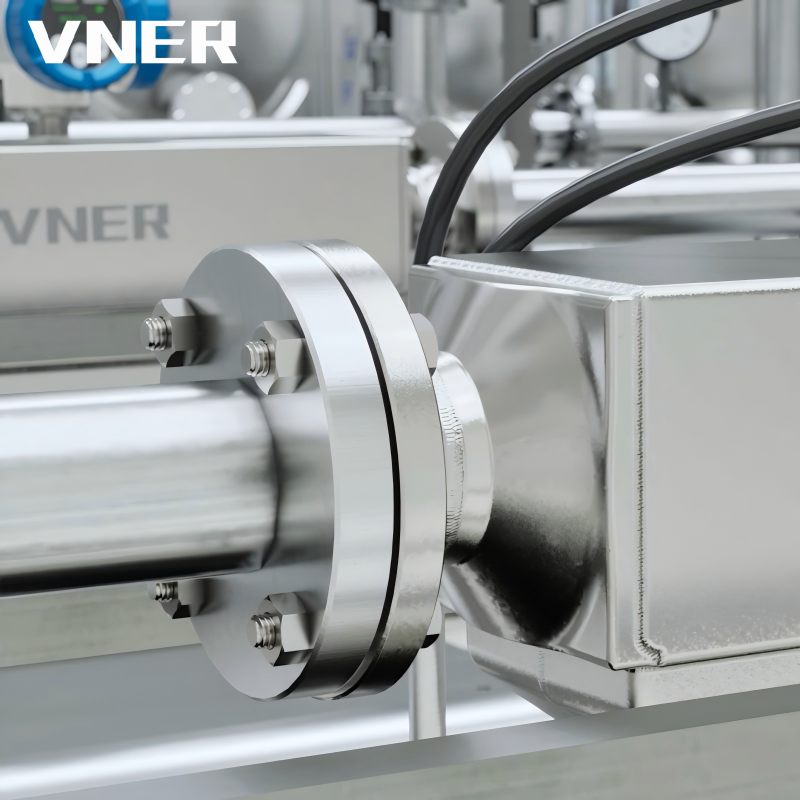 AC Series Coriolis Mass Flowmeter for Direct Mass MeasurementMeasures mass flow and density directly, offering high-accuracy options for liquids, slurries, and gases where direct mass measurement suits the process.View Product →
For gas volume measurement, the pressure reference becomes part of the measurement chain. A gas turbine meter measures actual volume, and the flow computer or compensation package converts it to standard conditions using absolute pressure and absolute temperature. The LWQ gas turbine flowmeter is typically applied where the gas is clean and the operating conditions suit a turbine meter; the commissioning check should confirm how absolute pressure is obtained.
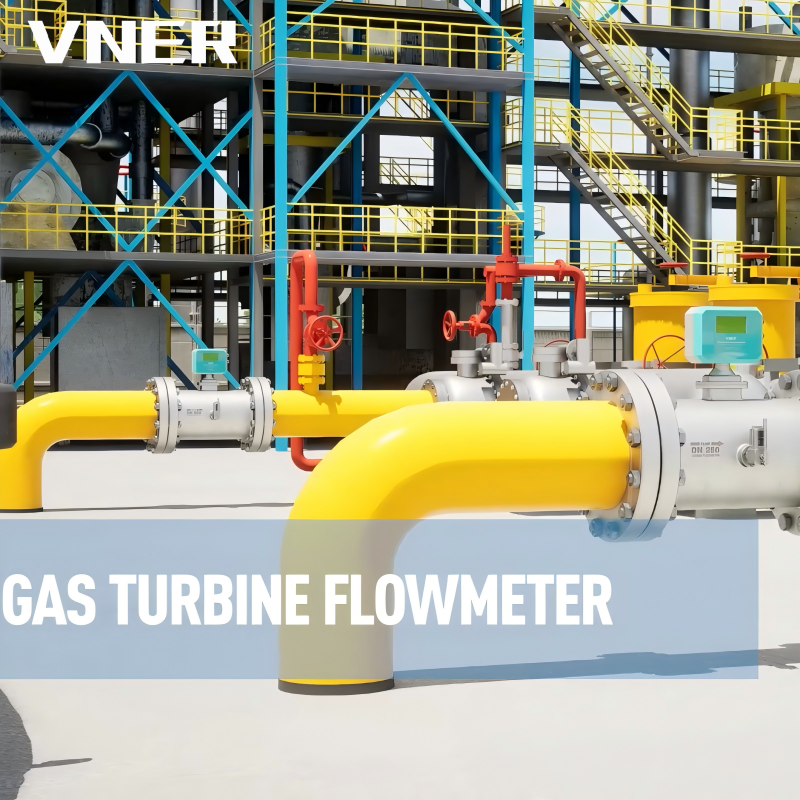 LWQ Series Gas Turbine Flowmeter with Optional Temperature/Pressure CompensationMeasures clean, dry gas volumetric flow and can calculate standard volume with integrated temperature and pressure sensors, supporting commissioning checks on pressure reference.View Product →
The broader lesson is that pressure transmitters and flowmeters should be specified as one measurement system. A gauge transmitter may be perfectly accurate and still produce an incorrect standard-volume result if the calculation expects absolute pressure. Documenting the reference, the local barometric assumption, and the calibration method keeps that responsibility visible across instrument, control, and procurement teams.
A Practical Decision Path
Use gauge pressure when the process question is naturally atmospheric-relative and when barometric variation is inside the allowed uncertainty. Typical examples include hydraulic pressure, pump discharge, filter differential monitoring, and general plant indication. Use absolute pressure when the process involves vacuum, gas density, flow compensation, thermodynamics, or a record that must remain meaningful at different altitudes.
When the choice is not obvious, write the calculation first. If the equation contains absolute pressure, specify an absolute transmitter or a gauge transmitter with a measured barometric input. If the equation contains gauge pressure, confirm that the control system and the calibration procedure use the same vented reference. Then check the range, the calibration certificate, the unit string, and the spare-part description. The goal is not to make every instrument absolute; it is to make the reference explicit and consistent.
Gauge pressure and absolute pressure are not competing technologies. They are two ways of stating where zero begins. A gauge transmitter answers how far the process sits above the local atmosphere. An absolute transmitter answers how far it sits above vacuum. The first is intuitive for many hydraulic and pneumatic systems. The second is necessary when vacuum, gas density, flow correction, or altitude-independent records are involved.
The most reliable projects treat the reference as a specification item, not an afterthought. They record local atmospheric pressure, state the reference on the datasheet, align the flow computer equation with the transmitter output, and calibrate against the correct zero. That discipline prevents a small word on a tag from becoming a large error in flow, safety, or custody transfer.


Products
Contact Information
-

+86 18652789521
+86-0514-83633600 / 83633900 -

+86-0514-83633600 / 83633900
-

s@vner.com.cn
katherine@vner.com.cn -

No. 11 Xingye Road, Chenji Town Industrial Park, Yizheng, Yangzhou, China
